What are the 10 stages of brain injury recovery? Lehigh Valley personal injury attorney Ed Shaughnessy explains the process of getting back to a person’s pre-injury self. He’s experienced at helping families navigate the TBI recovery journey, understands that sometimes victims display inappropriate behavior, and is compassionate during the problem-solving phase of seeking compensation for traumatic brain injuries caused by someone else’s negligence.
If a loved one has suffered a traumatic brain injury from a car accident, fall, head injury at work, or other type of physical force, attorney Shaugnessy understands how desperate family members are to see improvement in memory problems, decision-making skills, and other common causes of their loved one not having their normal brain function. He’s helpful for both older and younger individuals, whether they’re in their deepest state of unconsciousness, are able to make simple sentences, or can have short conversations. He understands recent events have affected your family’s daily life, and knows families need more than minimal help. They need long-term care and a traumatic brain injury lawyer who will actively participate in getting their loved one out of the hospital and back to living as normally as possible.
Contact the law firm for a free consultation by calling (610) 258-9955 or completing the online contact form.
What are the 10 Stages of Brain Injury Recovery?
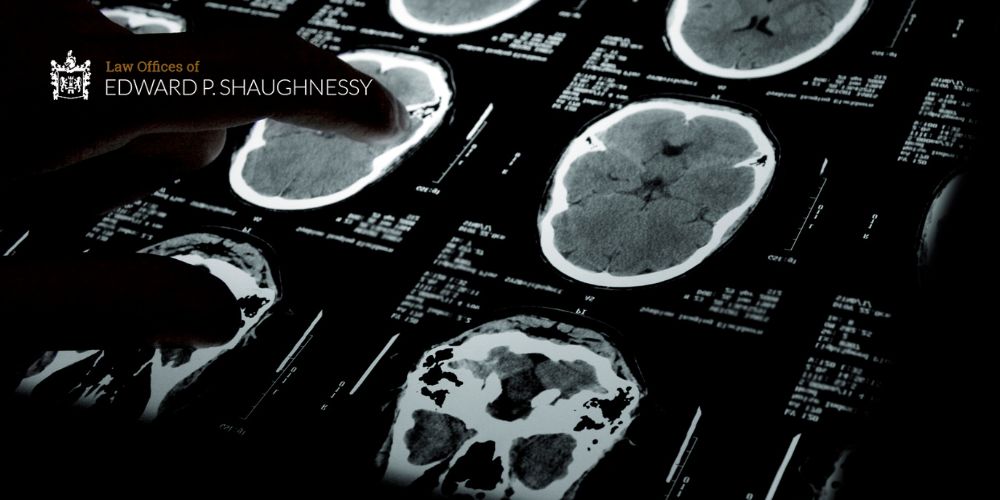
Going through a traumatic brain injury means going through a path of TBI recovery stages. This path can be different for every person and the severity of every injury. Some may end up in a rehabilitation facility to work on their recovery. A brain injury causes damage to brain tissue caused by an external force. To be diagnosed with a TBI, your injury must have one of the following: documented loss of consciousness, the person cannot recall the actual event, or a skull fracture, post-traumatic seizure, or an abnormal brain scan.
The brain injury recovery stages path will be dependent on the extent or degree of the injury. The degree of the damage is estimated by measuring the duration of the loss of consciousness, the depth of a coma, the level of amnesia, and through brain scans.
10 Stages of Brain Injury Recovery: Early Stages
There are three early stages of brain injury recovery. A person during early brain injury recovery stages is unconscious, unresponsive, or in a semi-conscious state. Mild TBIs can bring fewer challenges compared to moderate to severe brain injuries.
Stage 1: No Response (Coma)
This is the first stage of recovery following a traumatic brain injury:
- Complete unresponsiveness to stimuli
- Eyes remain closed
- No purposeful movements
- Patient on life support or breathing assistance
- The medical team monitors brain function and vital signs
- Family presence and voices may be helpful
- Duration varies: Days to weeks or longer
Depending on the severity, medical professionals can induce a coma to minimize swelling and reduce further damage. During this part of the 10 stages of brain injury recovery, victims may already be in a coma. The first stage of brain injury recovery is slow and painful for families. In a coma, you’ll likely see no purposeful movement.
Stage 2: Generalized Response (Vegetative State)
Stage 2 of the recovery process can include a vegetative state. This is an unresponsive wakefulness syndrome that impacts the neurological responses of someone in a vegetative state. For example, in a generalized response, the person in a vegetative state may have reflexes to pain
In a vegetative state, a person may:
- Go through a sleep-wake cycle
- Inconsistent movement and non-purposeful reactions to stimuli
- May respond or react to pain, loud noises, or touch through reflexes
- Responses are delayed and limited
- Eyes may open but not track or focus
- Movements are reflexive, not intentional
- Signs of emerging awareness
The vegetative state requires close medical monitoring of blood pressure and eye movement to determine the prognosis and ongoing treatment.
Stage 3: Localized Response (Minimally Conscious)
In the minimally conscious state, a person may be partially conscious. They may know where sounds are coming from. This is expected but inconsistent. Once a victim can accurately answer questions, they are considered “emerged” from the minimally conscious state and may show other signs of improvement.
10 Stages of Brain Injury Recovery: Mid Stages
The mid stages of recovery can include several symptoms. A patient with head injuries can experience memory gaps, cognitive function issues, and types of post-traumatic amnesia.
Stage 4: Post-Traumatic Amnesia (Confused and Agitated)
During stage 4 of the 10 stages of brain injury recovery, amnesia impairments start to show. The person may experience confusion and be disoriented due to amnesia. Anterograde amnesia and retrograde amnesia are the two types.
- Retrograde amnesia affects the ability to remember past events.
- Anterograde amnesia affects the ability to remember or form new memories.
This is often followed by moderate to severe brain injuries. During this TBI recovery stage, the person may feel agitated or experience frustration. Support from loved ones during this time is crucial, as remembering things can become more difficult.
Stage 5: Confused and Inappropriate Behavior
In this portion of the 10 stages of brain injury recovery, inappropriate behavior is often common.
- Confusion persists, but becoming agitated decreases
- Can respond to simple commands consistently
- Highly distractible with short attention spans
- Memory problems: Can’t retain new information
- Lacking awareness
- Inappropriate behaviors
- May have conversations, but the content doesn’t make sense
- Beginning of active rehabilitation
Patients who are recovering from a traumatic brain injury need their family members to make it through a full recovery. Behavior changes are typical in the stages of recovery. Patients can struggle with social interaction, leading them to avoid others, interrupt, or say things that do not “fit”. Maximal assistance for the survivor is essential during this stage of recovery.
Stage 6: Confused But Appropriate
Confusion is another common symptom of the recovery stage. Traumatic brain injury studies show that there is an increased risk of confusion following a loss of consciousness. In this brain injury recovery stage, the survivors will likely require moderate assistance for normal daily activities.
- Follows directions consistently
- Recognizes family and staff
- Aware of self and surroundings but confused about details
- Short-term memory impairment continues
- Can participate in therapy but needs prompting
- Requires supervision for safety
- Shows goal-directed behavior with assistance
- Personality changes may emerge
Confusion can lead to symptoms of disorientation, mood swings, and an inability to stay focused. Healthcare professionals and loved ones can create a structured plan to ensure a patient gets to the next stage. This can be done by creating a stable schedule and environment for the victim to navigate.

10 Stages of Brain Injury Recovery: Later Stages
As a patient gets into the later stages of brain injury recovery, medical professionals and loved ones may be able to see the healing process continue. Having the support of medical professionals throughout the recovery process can lead to optimal recovery. Once the survivor consistently remembers, doctors may recommend that they attend a rehab facility.
Stage 7: Automatic and Appropriate
In this brain injury recovery stage, patients begin to respond automatically and follow simple instructions. They may struggle with new tasks. This points to signs of the healing process.
- Follows directions consistently
- Recognizes family and staff
- Aware of surroundings but still confused sometimes
- Short-term memory loss continues
- Can participate in therapy but needs prompting
- Requires supervision for safety
- Shows goal-directed behavior with assistance
- Behavior changes may emerge
Stage 8: Purposeful and Appropriate
This stage helps move someone with a TBI closer to achieving independence. A TBI victim in the purposeful stage will be able to complete tasks with standby assistance from a medical professional or loved one. Standby assistance exists to keep a TBI patient safe while allowing them to care for their own basic needs.
- Alert and oriented in all settings
- Recalls past and recent events
- Can learn new information with effort
- Independent in completing daily activities
- Recognizes own impairments and limitations
- May have difficulty with abstract reasoning
- Challenges with multi-tasking and complex tasks
- Social and emotional issues may arise
- Preparing for return to work or school
10 Stages of Brain Injury Recovery: Final Stages
Stage 9: Modified Independence with Standby Assistance
In this brain injury recovery stage, the patient will likely be able to complete tasks independently and have self-awareness.
- Independent in most activities
- May need assistance in stressful or emergency situations
- Cognitive challenges with complex tasks
- Compensatory strategies help manage deficits
- Can work or attend school with accommodations
- Ongoing therapy and support are beneficial
The patient’s progress depends on the therapy sessions, speech therapy, and emotional support the survivor has access to. Lehigh Valley traumatic brain injury lawyer Ed Shaugnessy understands what’s necessary for survivors to progress through the TBI recovery stages and helps family members get access to these.
Stage 10: Purposeful, Appropriate, and Full Recovery
The final stage of TBI recovery is finding the survivors’ independence and learning to manage conditions. Survivors need support systems to help with coping strategies. Depending on the patient’s progress, the survivor may only need minimal assistance for daily activities, but won’t be able to maintain like an average person.
- Independence in daily life
- Returns to pre-injury functioning or close to it
- May have subtle deficits only noticeable in demanding situations
- Successfully manages work, school, and relationships
- Note: Many patients do not reach Stage 10
- Continued improvement is possible years after the recovery process
Finding coping skills and emotional support from family members can help individuals achieve a full recovery.
Key Points Affecting Brain Injury Recovery Stages
- Severity of initial condition (mild, moderate, severe)
- Location of damage
- Age at time of traumatic brain injury (younger individuals often heal faster)
- Pre-injury health and cognitive abilities
- Quality and intensity of rehabilitation
- Family support and involvement
- Access to specialized treatment
- Motivation and participation in therapy
- Secondary complications (infections, seizures)
- The Rancho Los Amigos Scale
The Rancho Los Amigos Scale is a medical scale used to measure recovery levels after a traumatic brain injury. The scale outlines ten stages of cognitive functioning, ranging from being completely unresponsive to total TBI recovery.
Rehabilitation teams use it to track progress, guide treatment planning, and educate families about expected recovery patterns. By identifying a patient’s current level, clinicians can tailor therapy to their needs and better predict long-term outcomes in traumatic brain injury rehabilitation programs.
Common Challenges in The Traumatic Brain Injury Recovery Stages
- Physical: Weakness, balance problems, coordination issues
- Cognitive: Memory, attention, processing speed deficits
- Communication: Speech, language, and expression difficulties
- Emotional: Depression, anxiety, mood swings, personality changes
- Behavioral: Impulsivity, aggression, lack of inhibition
- Social: Difficulty reading social cues, maintaining relationships
- Fatigue: Mental and physical exhaustion is common
Can You Sue for a Traumatic Brain Injury in Pennsylvania?
Victims of traumatic brain injuries (TBI) in Pennsylvania may be entitled to file a lawsuit when negligence causes harm. Common causes of such unexpected situations include workplace incidents, sports injuries, falls, violent acts, or car accident-related brain injuries in Pennsylvania. Mild TBIs can cause lasting physical and financial challenges. Latent brain injuries present their own complexities.
This makes working with an experienced Easton traumatic brain injury lawyer to seek compensation for medical expenses, lost income, and long-term care vital.
Who May Be at Fault for a TBI?
If you’ve suffered a traumatic brain injury (TBI), your condition may be the direct result of someone else’s negligence. Edward P. Shaughnessy helps survivors navigate the complex stages of recovery and pursue full compensation. He can hold the at-fault party accountable and fight for the financial support needed for optimal recovery.
What Damages Can You Sue For After a Brain Injury in Pennsylvania?
In Pennsylvania, survivors can file a lawsuit when traumatic brain injuries are the direct result of another person’s negligence. With the help of a Lehigh Valley traumatic brain injury lawyer, survivors may recover economic damages such as medical bills, lost income, and reduced earning capacity, as well as non-economic damages for pain, suffering, emotional distress, and loss of enjoyment of life.
Why Families Choose Ed Shaughnessy to Protect Loved Ones After Traumatic Brain Injuries in Pennsylvania
Choosing the right lawyer after a traumatic brain injury is essential. With over 35 years of experience, Edward P. Shaughnessy provides the personal attention and dedication of a smaller firm while delivering skilled legal representation to help clients recover full compensation.

Contact a Lehigh Valley Traumatic Brain Injury Lawyer For a Free Consultation
If a family member or loved one suffered a TBI because of another person’s negligence, you need skilled legal representation to secure recovery on their behalf. Ed Shaughnessy is a committed traumatic brain injury attorney who understands the physical, financial, and emotional struggles of going through the brain injury recovery stages. To discuss your TBI case and schedule a free consultation, call (610) 258-9955 or complete the online contact form today.